









Acoustic forest monitoring: what spring 2026 reveals at Sattelbrunnen
Between January and April 2026 we ran acoustic monitoring at our Sattelbrunnen plot — 13 species documented, 45.5 % species richness, dominated by the coal tit.
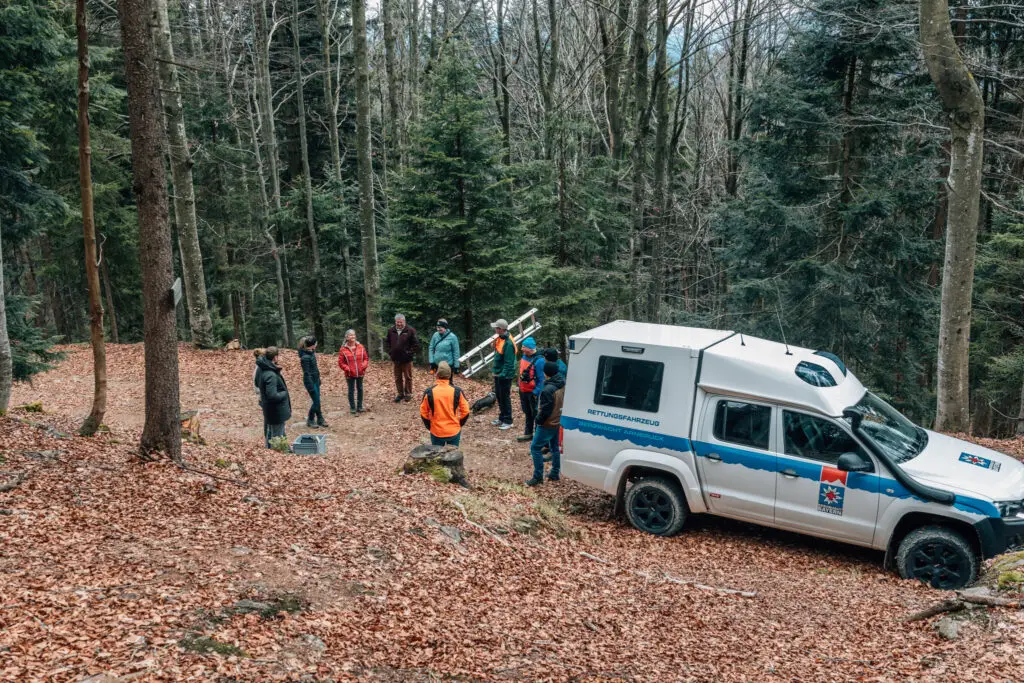
A spring to listen to: acoustic monitoring in the Sattelbrunnen forest.
Between 13 January and 13 April 2026 we deployed acoustic monitoring on the Sattelbrunnen forest plot. We documented how the area sounds — and through that, how it is actually used.
Thirteen species were captured, with a species richness of 45.5 % of the potentially detectable species. The acoustic profile is clearly forest-shaped: dominated by the coal tit and complemented by species such as nuthatch, treecreeper, goldcrest, and other typical forest birds. This is a single-plot analysis — an acoustic portrait of Sattelbrunnen in spring 2026.
Use, not just structure
Vegetation data shows what an area looks like. Acoustic monitoring shows how it is used. The recorded species occupy different niches — from the canopy through trunks and bark to transitional zones. The monitoring captures how the habitat is used across multiple layers.
What the acoustics tell us about spring 2026
- Clear dominance of the coal tit — the site is acoustically defined by a forest species.
- Structurally rich use of the stand — nuthatches and treecreepers indicate active use.
- Spring-active complement through typical songbirds — seasonal occupation of the stand.
- Generalists in supporting roles — the forest-specific profile is preserved.
How spring sounds at Sattelbrunnen
The period from 13 January to 13 April 2026 shows Sattelbrunnen as a forest-shaped, acoustically active site. Spring 2026 in the Bavarian Forest sounds like a habitat used across multiple layers.
More on PASSION4IT’s forest stewardship: Protecting Heimat — 5,000 m² of woodland at the Mühlriegel.
Book a non-binding first conversation now — learn more about PASSION4IT and our work in the region.