








A work day in the Danube valley: how 22 hectares of peat soil become habitat again
On 16 September 2026 the PASSION4IT team was out on the project site between Moos and Künzing, cutting back scrub and clearing the ground. What is planned on those 22 hectares, and why the construction work has to be finished by the turn of the year.
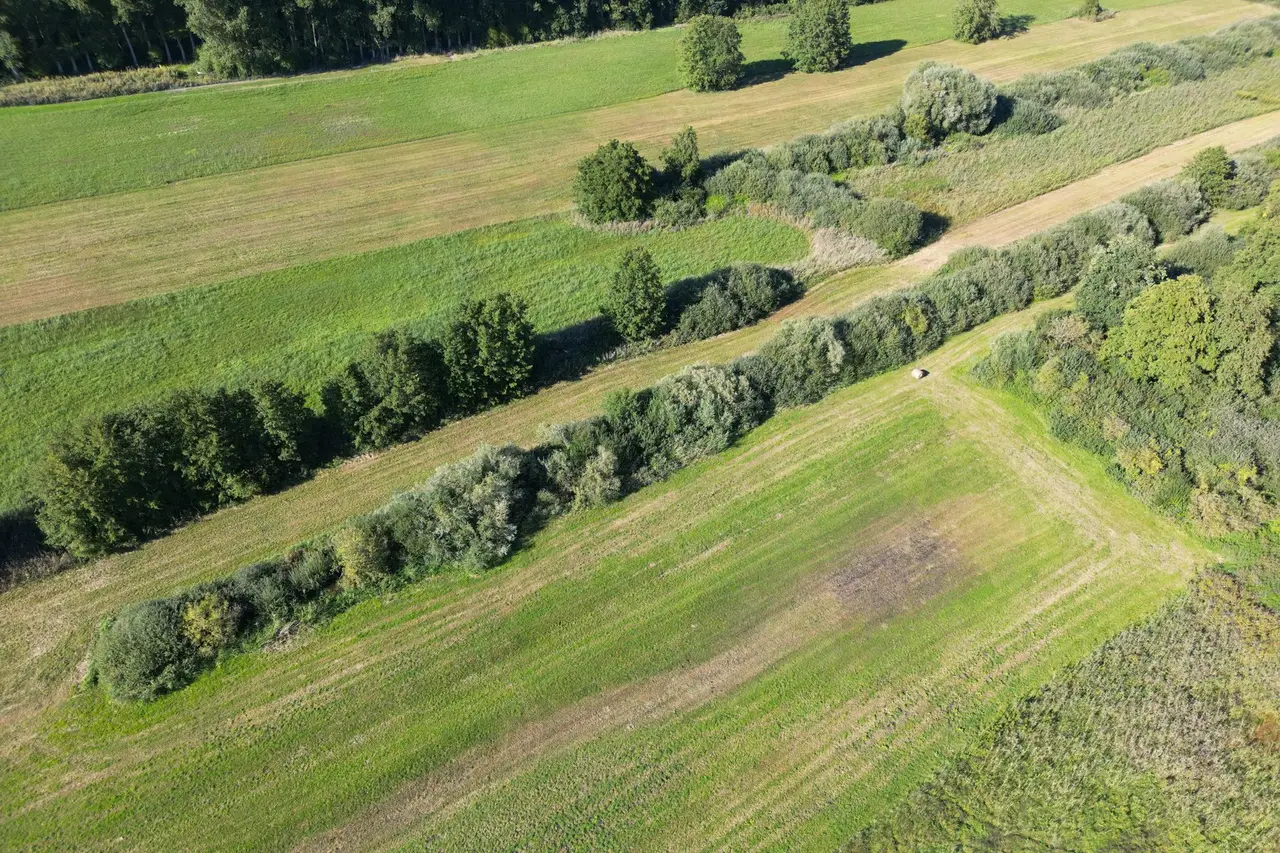
On 16 September 2026 the PASSION4IT team spent a day working on the project site in the Danube valley: cutting back scrub, clearing the ground. It is the groundwork for rewetting 22 hectares of peat soil between Moos and Künzing, which we finance together with our long-standing partner Planted. The construction work is due to be completed by the turn of the year; from 2027 the site restores itself.
What you’ll take away:
- What happens on those 22 hectares in the Danube valley, and in what order
- Why closing a single ditch is what tips the balance
- Which species benefit from the site, and what Galloway cattle have to do with it
- Why a work day in September is the precondition for the construction phase
- How PASSION4IT’s one-per-cent commitment can be verified
What happens on the 22 hectares in the Danube valley?
We finance the rewetting of 22 hectares of peat soil — around 30 football pitches — between Moos and Künzing. The core of the measure is the structural closure of the main drainage ditch. That stops the peat decomposition which runs continuously on drained peat soil.
On more than 5 hectares, grazing with Galloway cattle additionally creates a mosaic of different habitats, complemented by new shallow-water zones. The project runs through 2026 and the construction work is due to be finished by the turn of the year. From 2027 the site does the work by itself.
In general terms: intact peatlands can bind a multiple of the carbon held by other soils on the same area. We deliberately give no project figure for this — the measure does not support one at this stage.
Why does a single ditch decide the fate of the whole site?
Because a drainage ditch does not merely dry a peatland out, it keeps the process running. As long as air reaches the peat, it carries on decomposing. Drained peat soil does not stop breaking down — it does so year after year.
The structural closure reverses exactly that mechanism. This is why the measure intervenes at a comparatively small physical point and still affects 22 hectares. The water table rises again afterwards, and the vegetation shifts over the following years.
Which species benefit from the site?
The stated aim of the grazing and the shallow-water zones is to protect the local populations of curlew and lapwing. Both species need open, damp ground with short vegetation — precisely what insect-friendly grazing with Galloway cattle produces.
The site is at the same time a refuge for species endangered in Bavaria, among them the moor frog and the spotted crake, which depend on wet habitats. The measures also include fencing to protect against predators.
Why a work day in September?
Because the construction phase requires a clear site. Scrub that has grown in has to be cut back and the ground cleared before work on the ditch can begin. That step cannot be pushed into the winter if the construction work is to be finished by the turn of the year.
For us the day serves a second purpose. A project that exists only as a line item in a financing arrangement stays abstract. Anyone who has worked a day on the site can explain afterwards what it is about — and on a topic that otherwise slides quickly into assertions, that is worth more than any brochure.
How can our commitment be verified?
We have committed to investing 1 per cent of our annual revenue in nature conservation projects each year. This is verifiable in the public directory of 1% for the Planet, where our profile is listed.
The moorland project in the Danube valley is this year’s regional contribution. It builds on our existing work — 5,000 square metres of woodland at the Mühlriegel, described in protecting our home region, and the acoustic monitoring in the forest whose spring analysis is set out in what spring 2026 in Sattelbrunnen reveals.
An overview of all ongoing measures is on the climate action page.
Frequently asked questions
Where is the PASSION4IT moorland project?
In the Danube valley between Moos and Künzing in Lower Bavaria. The site covers 22 hectares of peat soil, around 30 football pitches. The partner is Planted and the project runs through 2026.
What exactly is being done on the site?
The main drainage ditch is closed structurally, which stops the peat decomposition. On more than 5 hectares, grazing with Galloway cattle creates a mosaic of different habitats, complemented by new shallow-water zones and fencing to protect against predators.
Which species are being protected?
The stated aim is to protect the local populations of curlew and lapwing. The site is at the same time a refuge for species endangered in Bavaria such as the moor frog and the spotted crake, which depend on wet habitats.
When is the project finished?
The construction work is due to be completed by the turn of the year. From 2027 the site restores itself, meaning the water table rises and the vegetation shifts over the following years without further intervention.
How much CO₂ does the project bind?
We give no project figure for this. In general terms, intact peatlands can bind a multiple of the carbon held by other soils on the same area — but the measure does not support a reliable figure for this specific site at this stage.
What did PASSION4IT do on 16 September?
The team spent a day working on the project site, cutting back scrub and clearing the ground. That is the precondition for the subsequent construction work on the drainage ditch.
How can the one-per-cent commitment be verified?
Through the public directory of 1% for the Planet, where the profile of PASSION4IT GmbH is listed. The commitment is to invest 1 per cent of annual revenue in nature conservation projects each year.
Which other nature conservation projects are running?
5,000 square metres of woodland at the Mühlriegel and acoustic monitoring in the forest, whose analysis we publish. An overview of all ongoing measures is on the climate action page.